Following last month's blog on concussion (which can be found here) there have been a few interesting articles popping up over the internet:
Wednesday 6 November 2013

Friday 25 October 2013
Controlling body composition - nutrition
From the results of last week's survey (thank you for participating in it!) one issue was raised several times - nutrition and weight control. So here's a guide on how to begin addressing your nutritional needs while maintaining control over body composition.
Thursday 17 October 2013
Concussion in dance and aesthetic sports
Concussion, also referred to as minor traumatic brain injury (mTBI), is an injury more commonly associated with contact sports than with dancing. There has however been an increase in recent years in the number of reported concussions in dancers, and it is necessary for the dance teacher, director, choreographer and dancers themselves to be able to recognise and react to a concussion when it occurs.
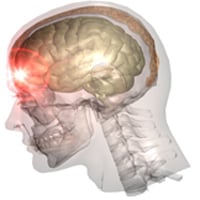
In aesthetic sports such as gymnastics and cheerleading, and in dance related genres such as physical theatre, the reported instances of concussion are significantly higher than in dance, largely due to moves performed while elevated and in performing tricks and stunts. In cheerleading, stunts are responsible for 90% of the concussions suffered by athletes, with the majority of these affecting the bases, rather than the athlete in the air. Across various genres of dance, from street to ballroom to contemporary to lindy-hop, numerous aspects of choreography can pose a risk to dancers if not executed properly. With dance choreography constantly pushing new limits of dancers' physical abilities, and increasingly incorporating tricks and stunts in pieces, it is useful to now consider dance alongside gymnastics and cheerleading as an activity carrying the potential for concussion.
In a wide variety of sports, it has been found that concussion is under-reported, and that athletes go on to perform or compete after sustaining a head injury. It is imperative for the safety of the dancer or athlete that all concussions are recognised and appropriately addressed. Self-reporting of symptoms has been proven to be ineffective at identifying concussion, and so standardised testing procedures should be in place to ensure concussions are identified and appropriately addressed.
Tuesday 15 October 2013
Survey
In order to tailor and continue providing useful content, I'd be grateful if you could fill in this short survey if you've got a spare moment, http://www.surveymonkey.com/s/7NMJXBP What works, what doesn't , what you like, what you don't...
It shouldn't take more than a couple of minutes.
Thanks!
 |
| (c) Little Shao, 2013. |
Thursday 10 October 2013
Anterior Pelvic Tilt in Dancers
Correct alignment is crucial to dance technique. A common alignment issue in dancers is an exaggerated anterior pelvic tilt - tilting the the pelvis forward. No two individuals will have identical spinal and pelvic alignment, and so it is perhaps useful to think of there being an range that can be considered optimal rather than one set alignment that is perfect. The anterior pelvic tilt pulls the body out of correct alignment (outwith the optimal range), resulting in flawed technique and impaired performance. Your lower abdomen will protrude and your backside will stick out. Over and above the artistic flaw, anterior pelvic tilt impairs turnout and prevents proper muscle recruitment, can cause hip pain, back pain, knee pain and flat feet.

The hip flexors connect the femur to the hip and lower back; tight, short hip flexors cause the hip to pull forward. Any misalignment of the hips will effect the back, and anterior pelvic tilt will give a pronounced curvature of the thoracic spine. This in turn may then produce upper back pain, shoulder and neck pain, headaches and migraine.
Healthy hips are essential in dance, the turnout and all subsequent movement of the lower body originates here. While pelvic motion is central to many of the basic movements of dance (for example the battement de vant, a la seconde and derrière all display differing degrees of pelvic motion), the body should have a neutral home alignment. The internal rotation of the hip displayed with APT goes on to effect the lower limbs, producing subsequent internal rotation of both the femur and tibia, reducing turnout. This can cause or exaggerate existing over-pronation of the feet, causing foot, ankle and knee pain. Incorrect alignment further predisposes the dancer to injury.
The hip flexors connect the femur to the hip and lower back; tight, short hip flexors cause the hip to pull forward. Any misalignment of the hips will effect the back, and anterior pelvic tilt will give a pronounced curvature of the thoracic spine. This in turn may then produce upper back pain, shoulder and neck pain, headaches and migraine.
Healthy hips are essential in dance, the turnout and all subsequent movement of the lower body originates here. While pelvic motion is central to many of the basic movements of dance (for example the battement de vant, a la seconde and derrière all display differing degrees of pelvic motion), the body should have a neutral home alignment. The internal rotation of the hip displayed with APT goes on to effect the lower limbs, producing subsequent internal rotation of both the femur and tibia, reducing turnout. This can cause or exaggerate existing over-pronation of the feet, causing foot, ankle and knee pain. Incorrect alignment further predisposes the dancer to injury.
Friday 20 September 2013
Flexibility training - is it necessary?
Flexibility training can be divisive issue. Even I'm divided on it. On the one hand, you can improve your flexibility levels to a degree through appropriate training (stretching) methods. On the other, the gains you can make are somewhat limited, and I'll often argue largely outweighed by the likelihood of injury (up to 80% of dance injuries are sustained during flexibility exercises. That's an awful lot.).
Having spent the better portion of my life in dance training and surrounded by other dancers, I can honestly say I've seen a LOT of time wasted on flexibility training for next to no gains. 85% of your flexibility is down to your skeletal structure, 5% is down to environmental circumstances, leaving only 10% down to muscular elasticity. 10%. All those hours spent trying to push that little bit further, and the best you can hope for is 10%.
Having spent the better portion of my life in dance training and surrounded by other dancers, I can honestly say I've seen a LOT of time wasted on flexibility training for next to no gains. 85% of your flexibility is down to your skeletal structure, 5% is down to environmental circumstances, leaving only 10% down to muscular elasticity. 10%. All those hours spent trying to push that little bit further, and the best you can hope for is 10%.
Sunday 16 June 2013
Fitness for dance...not dance fitness
For sedentary individuals, taking up dance as a hobby or a past time can undoubtably have a positive effect on their overall health, fitness and well being, just as taking up any physical discipline can have a positive effect. Movements such as Zumba, aerobics, Jazzercise etc are all forms of dance fitness; as well as the plethora of community dance classes across a range of disciplines. While great at getting otherwise sedentary individuals into physical exercise, dance fitness has no relevance to the dance professional.
 As far as physical fitness goes, for the professional (or preprofessional) dancer, dance training alone is not enough. If you are serious about your dance performance you should get fit in order to dance, not dance to get fit. This means training outwith your technique and performance classes, to prepare the body for the demands you throw at it. Strength, aerobic, interval, plyometric and flexibility training are all necessary in order to condition your body to perform at the highest level.
Every professional athlete and sportsman/woman will train not only in their discipline, but for their discipline. A sprinter does not only sprint in their training sessions, a golfer does not spend all their time swinging clubs and a dancer should not spend all their time working on repetoire and syllabus.
As far as physical fitness goes, for the professional (or preprofessional) dancer, dance training alone is not enough. If you are serious about your dance performance you should get fit in order to dance, not dance to get fit. This means training outwith your technique and performance classes, to prepare the body for the demands you throw at it. Strength, aerobic, interval, plyometric and flexibility training are all necessary in order to condition your body to perform at the highest level.Every professional athlete and sportsman/woman will train not only in their discipline, but for their discipline. A sprinter does not only sprint in their training sessions, a golfer does not spend all their time swinging clubs and a dancer should not spend all their time working on repetoire and syllabus.
Wednesday 29 May 2013
Staying active during injury recovery
First up before I say anything else - speak to your doctor/physio/surgeon before you go hell for leather into any training routine while you're injured. The last thing you want to do it prolong your recovery or worsen your existing injury. Also, there are times when giving your body a break for at least a couple of weeks might actually be the best thing for it. Speak to your doctor, assess your situation and make your decision.
Training when you're injured can have a lot of benefits if you do it safely; it can slow muscle atrophy if you have limb immobilied, maintain your existing fitness levels, or at least prevent them from dropping too far, and can lessen the psychological impacts of injury. Unfortunately if you're injured and want to stay active, you may have to accept that you won't be dancing for a while. This doesn't mean you can't work on specific aspects of technique or fitness, just be smart about it. Any time I've injured myself I've found boredom and frustration can be one of the worst aspects so finding a way to stay motivated and at least maintain a basic level of activity feels better than nothing.
Training when you're injured can have a lot of benefits if you do it safely; it can slow muscle atrophy if you have limb immobilied, maintain your existing fitness levels, or at least prevent them from dropping too far, and can lessen the psychological impacts of injury. Unfortunately if you're injured and want to stay active, you may have to accept that you won't be dancing for a while. This doesn't mean you can't work on specific aspects of technique or fitness, just be smart about it. Any time I've injured myself I've found boredom and frustration can be one of the worst aspects so finding a way to stay motivated and at least maintain a basic level of activity feels better than nothing.
Subscribe to:
Posts (Atom)